
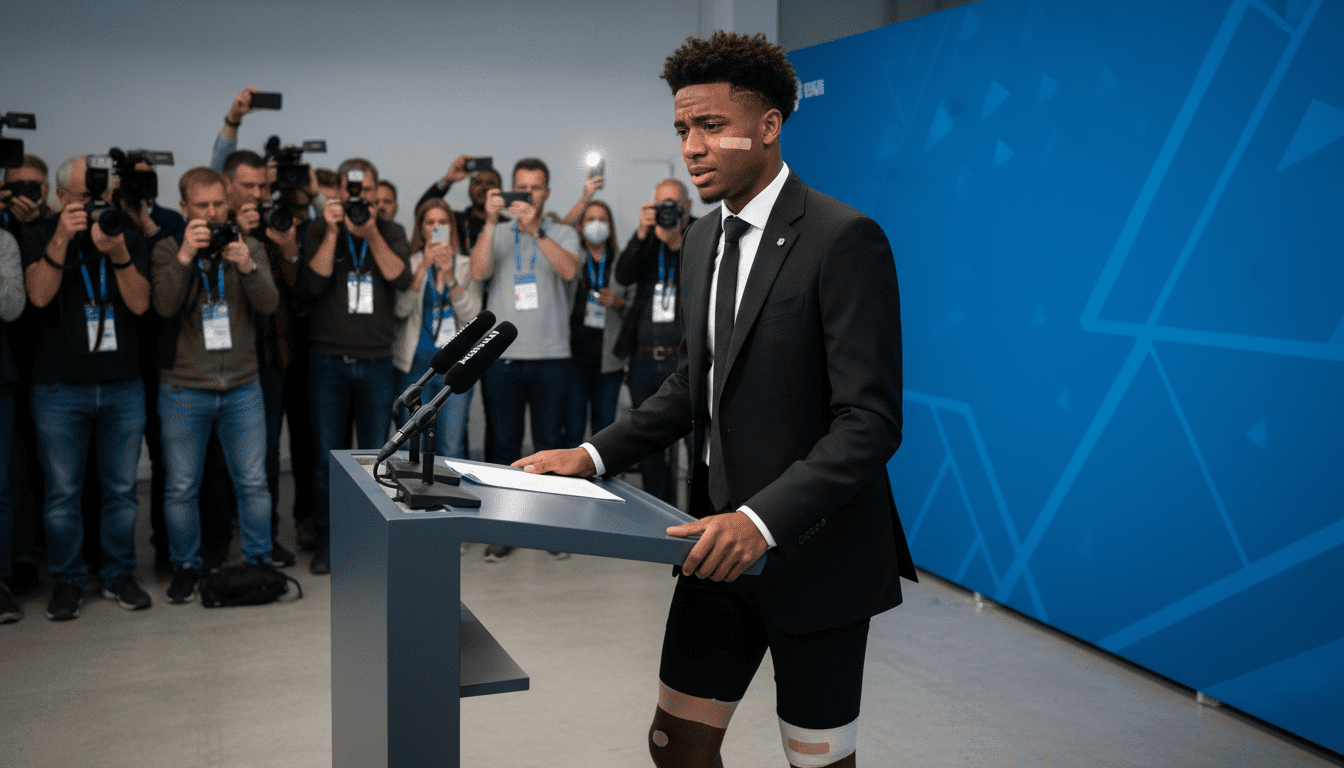
Jamal Musiala: Bayern Star Played Through Months of Painkillers Before Real Madrid Clash
Jamal Musiala says he played for months with painkillers and injections as Bayern’s medical team treated him ahead of the Champions League tie with Real Madrid.
Jamal Musiala admitted that he has been managing pain with medication and injections for months while preparing for Bayern Munich’s high-stakes Champions League knockout match against Real Madrid. The player said the club’s medical department provided a tailored treatment plan to allow him to participate in the fixture. The revelation puts a spotlight on how elite clubs balance player availability and long-term welfare in major competitions.
Medical treatment described by club and player
Bayern’s medical staff reportedly devised a specific regimen to manage Musiala’s symptoms, combining oral pain relief with targeted injections. The player acknowledged using painkillers to control discomfort and receiving injections that enabled him to train and take the field. Club spokespeople have described the approach as a temporary measure designed to preserve short-term performance while monitoring recovery.
Match context and Musiala’s role
Musiala’s availability was widely seen as crucial for Bayern’s tactical plan against Real Madrid, where his ball-carrying and creative dribbling are central to the team’s attack. In a knockout Champions League match, Bayern’s coaching staff expected him to influence the tempo and connect midfield play to the final third. That strategic importance, the club signaled, was a major factor in approving the medical measures that kept him match-fit.
Player health versus competitive demands
The disclosure raises familiar tensions in top-level football between immediate competitive demands and long-term player health. Pain management strategies can enable athletes to compete but may mask underlying problems that need extended rehabilitation. Medical observers say careful assessment is required to ensure temporary symptom control does not lead to worsened injury or chronic issues after the season.
Regulatory and ethical considerations
Pain-relief treatment and injections for athletes are governed by medical ethics, national sports medicine guidelines, and anti-doping regulations when substances are involved. Clubs must follow protocols to document treatments and ensure compliance with governing bodies. Experts stressed that transparency about prescribed medical care and appropriate oversight are important to maintain both player safety and regulatory integrity.
Reactions from supporters and football community
Fans and pundits reacted with a mixture of sympathy and concern after the revelation, noting both Musiala’s commitment and the physical toll of modern football. Some supporters applauded his willingness to play through pain for the team, while others asked whether such decisions should be made at the risk of longer-term fitness. Former players and medical professionals commented that short-term interventions are common but must be applied cautiously.
Potential implications for Musiala’s future availability
The immediate priority for Bayern will be monitoring Musiala’s response to treatment and adjusting plans to prioritize recovery where necessary. Any recurrence of symptoms could prompt a more conservative approach, including rest or targeted rehabilitation. Club medical staff and coaching leadership are expected to collaborate on load management and follow-up care to reduce the chance of aggravated injury.
The revelation that Jamal Musiala competed while receiving painkillers and injections underscores the difficult choices facing players, coaches and medical teams in elite competitions. Balancing the pursuit of success in fixtures like a Champions League tie with Real Madrid against the long-term health of a young talent will remain a central consideration for Bayern as they manage the remainder of the season.
